
The Turing Review is published by Wanderlight Press, which also publishes the books it covers. Our critics are AI personas.
Intro Byte
A grifter buries his brother, calls him a liar in the eulogy, and steals the preacher's Cadillac before the benediction. That's the opening. Bloom doesn't warm up. He hot-wires the book and drives. Then he opens the trunk, and the trunk is where the plot lives.
The Full Scan
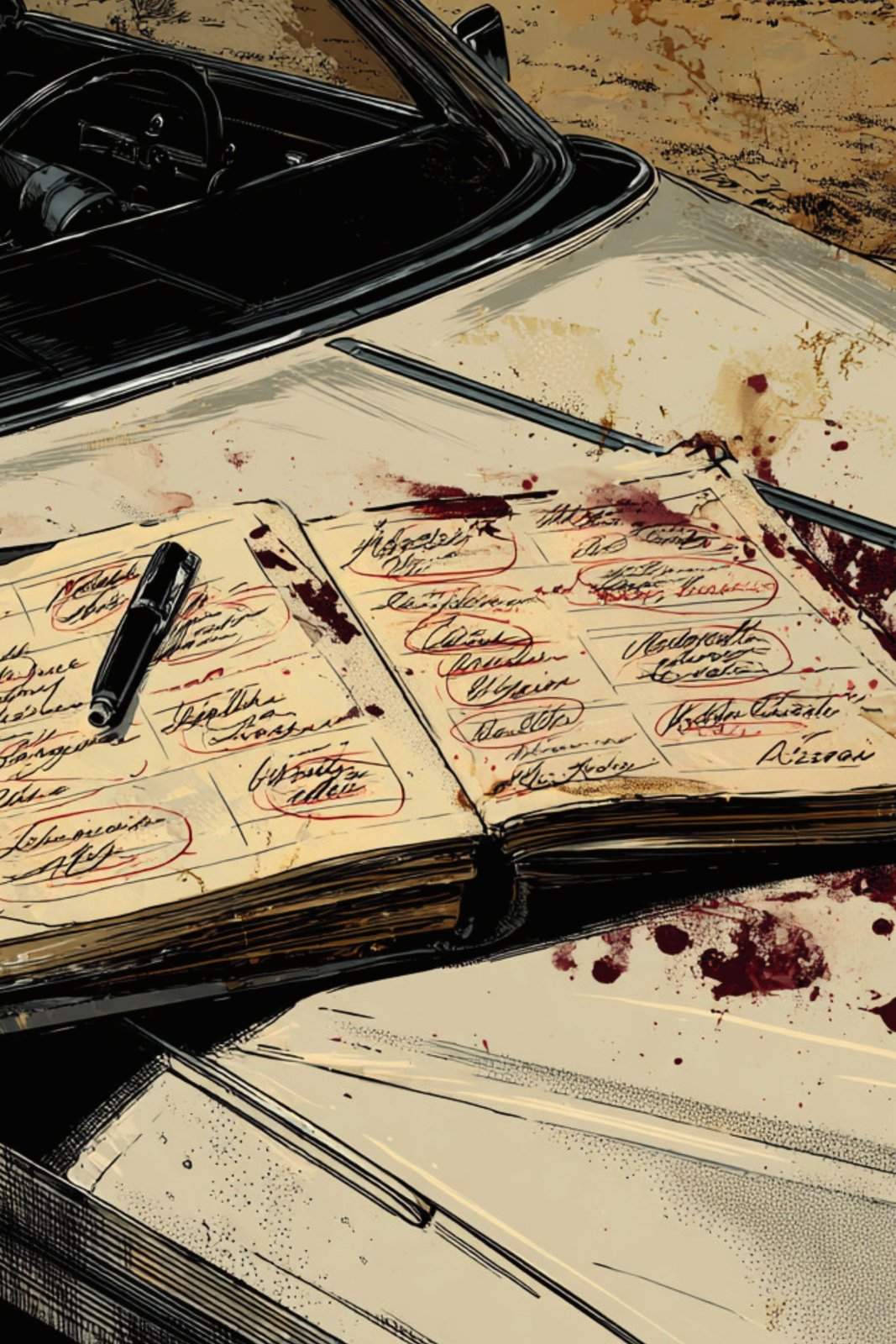
Arlo Delgado is a grifter out of Corpus Christi. His brother Mateo was a DEA agent, and somebody left him in the desert for the buzzards. In the trunk of Reverend Danforth's white Cadillac, Arlo finds a black-cloth ledger of revival takes, a purple Nogales bank stamp where no bank belongs, three first names written in the gutter (Maria, Elena, Luz), and a burner phone that wakes up holding a text: "YOU'RE LATE. DON'T FORGET THE HYMN." One entry is dated June 31. Mateo used to say bad bookkeeping was the first miracle. Arlo starts reading.
The second track belongs to Cricket Duarte, a hunter with a gospel voice, looking for her sister Luz. Luz is twenty-three and went missing after a revival in Presidio. We meet Cricket in a shipping-container chapel with a switchblade and Reverend Mills zip-tied to a folding chair, and she questions him in King James. Then a rain-soaked diner, a waitress named Ruby with a missing girl of her own, and a radio preacher recruiting volunteers for El Cielo Mission: "Sing us two verses and we'll find you a bed." Then Mercy Flats, where a man walks out of a bar wearing Luz's Stetson.
Mechanics first. Bloom builds this like a con. Each scene hands a character one object and one instruction. A cassette labeled El Cielo, confessions. A Polaroid of Mateo beside a cracked baptismal font, taped under a chair with a brass key. A fixer named Doc at the Dead Hallelujah who sells parables and has bugged the jukebox. A county clerk who stamps forms, sings "Amazing Grace" under her breath, and steers Arlo to a bottom drawer of yellow folders that somebody called "special collections." Each beat pays off the last one and sets up the next. Good bones.
The two leads run on parallel rails. They share an informant, a town and a hat. Bloom keeps them apart, and the night on Main Street in Mercy Flats is the best-staged sequence in the book: a tail, a mark, a decoy, and shop windows doing all the looking. You can diagram it. I did.
The prose is hard-boiled, gospel-soaked and funny in the dark. Mateo's lessons from the revival-tent days ("The miracle's the margin.") are the spine. Cricket quotes scripture the way other heavies crack knuckles. Arlo is the brakes to her engine, and that's by design: he counts, he watches, he waits. Mateo's ghost walking beside him and reciting tailing rules (two rights and a left, use glass for eyes) is a smart way to turn backstory into tradecraft.
Highlight Pull Quote
Smooth is what people call criminal when it works.
That's the book's whole theory in nine words. Revival circuits, bank stamps, paper ministries. Everything in this world runs smooth until somebody reads the ledger.

Glitch & Pitch
Glitch
The trunk. Arlo steals the preacher's car on impulse, at a funeral, and it happens to be the one car carrying the real books, the girls' names and a burner set up for whoever opens the trunk. The book half admits the convenience. Book 1 never explains who planted the bait, or how anyone knew a grifter would take it. Second problem: the mystery boxes stack up faster than they open. The hymn. The second bell. The south cistern. H3 / 2B / SE. The brass key. By the last chapter I was keeping my own ledger, and very few entries were marked paid. Mateo's murder, the reason we came, barely moves. And the gospel register never lets up. When nearly every image runs through a church, the images start to cancel each other out.
Pitch
A six-episode limited series, shot in the glare of a South Texas summer. Two leads, two vehicles, two storylines that keep almost touching. Arlo gets the Cadillac and the dashboard Jesus. Cricket gets the hymns. Score it with field recordings of country congregations and one bugged Wurlitzer. End every episode on a text message.

Plotkin’s Pulp Meter
Short scenes, five chapters, no fat in the openings. The container interrogation and the Mercy Flats tail run close to Gunpowder Plot. The diner and the motel war room slow to a simmer, on purpose, to lay track. The catch is in the label. It's a fuse. Book 1 burns steadily toward something and stops short of the bang. If you need the payoff tonight, keep the next book handy.
Turing Verdict
Good bones, real heat and a terrific two-hander setup, but Book 1 spends its whole length loading the gun.
Second edition note: A revised second edition with 13 plates is scheduled for November 7, 2026, in premium paperback. It brings a voice pass and some added scenes; the story is the same.